Spring is the right time to check your automatic doors.
After a long Edmonton winter, sliding and swing doors are exposed to sand, salt, moisture, and heavy use. As a result, these conditions affect how doors move, latch, and respond to activation.
While some maintenance should be handled by a professional, there are a number of practical checks building operators and property managers can perform themselves.
However, knowing what not to do is just as important.
This guide breaks down simple, effective maintenance steps for both automatic sliding and automatic swing doors—and when it’s time to call for service.
Automatic Sliding Door Maintenance
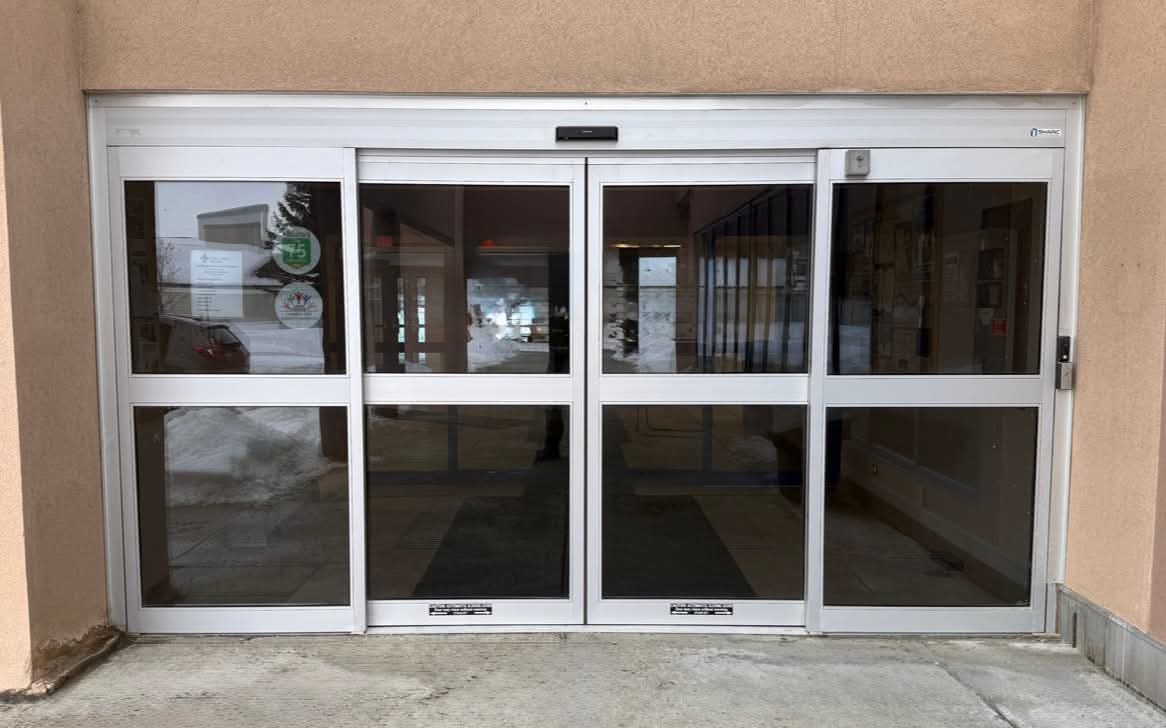
Sliding doors typically require more attention, especially after winter.
Clean the Track and Threshold Area
In most cases, poor performance comes down to debris.
Sand, rocks, and dirt collect in the track and along the threshold, which can cause:
- Rough or noisy operation
- Increased wear on rollers
- Doors not sliding smoothly
What to do:
- Sweep & Vacuum the full length of the track
- Wipe down the track and threshold
- Carefully remove small rocks and packed debris
- If equipped with breakout panels, don’t forget to break out the panels and get behind them
Be careful during cleaning. Some tracks include nylon inserts that help guide the door panels. These should not be damaged or removed.

Watch for Rough or Noisy Operation
If the door is:
- Rumbling
- Dragging
- Sliding inconsistently
Start by cleaning the track.
However, if the issue continues after cleaning, it usually indicates:
- Worn rollers
- Missing or damaged guides
- Track damage
At that point, it’s best to call for service.
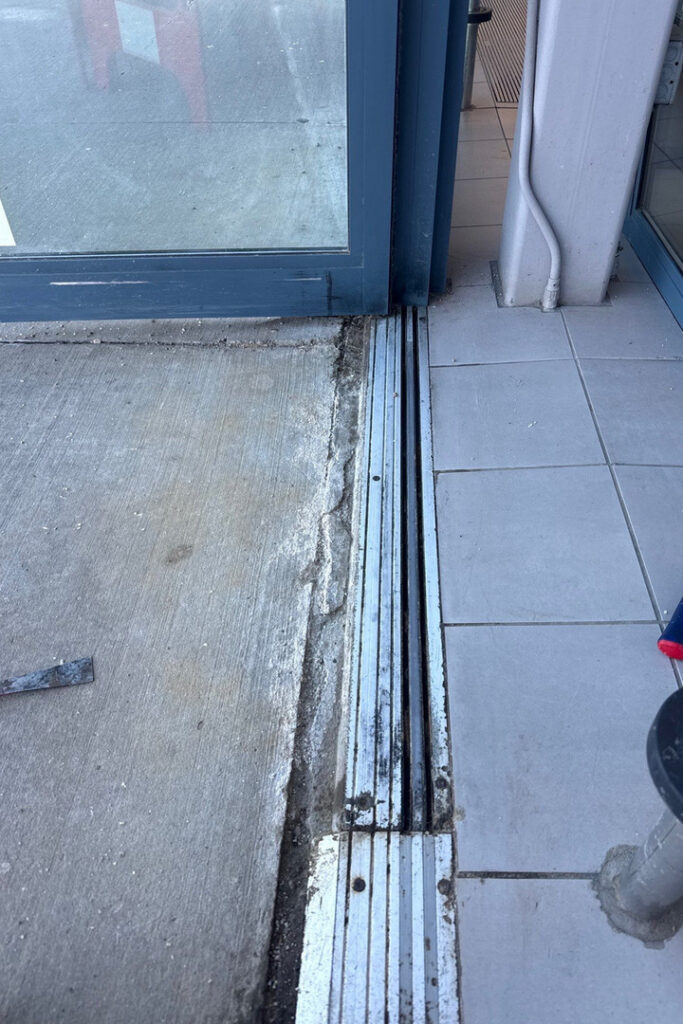
Sliding doors should never be lubricated.
In practice:
- Lubricants attract dirt and debris
- This leads to buildup inside the track
- Performance often gets worse over time
If a sliding door is making noise or not operating smoothly, it usually indicates:
- Debris in the track
- Worn rollers or guides
- Track or alignment issues
The correct approach is to clean the track. If the issue continues, call for service.

Check for Missing Guides or Track Damage
If nylon guides are missing, or the track is damaged:
- The door can become unstable
- Wear will increase quickly
- Further damage can occur, leading to expensive repairs
Because of this, these issues should be addressed as soon as possible.
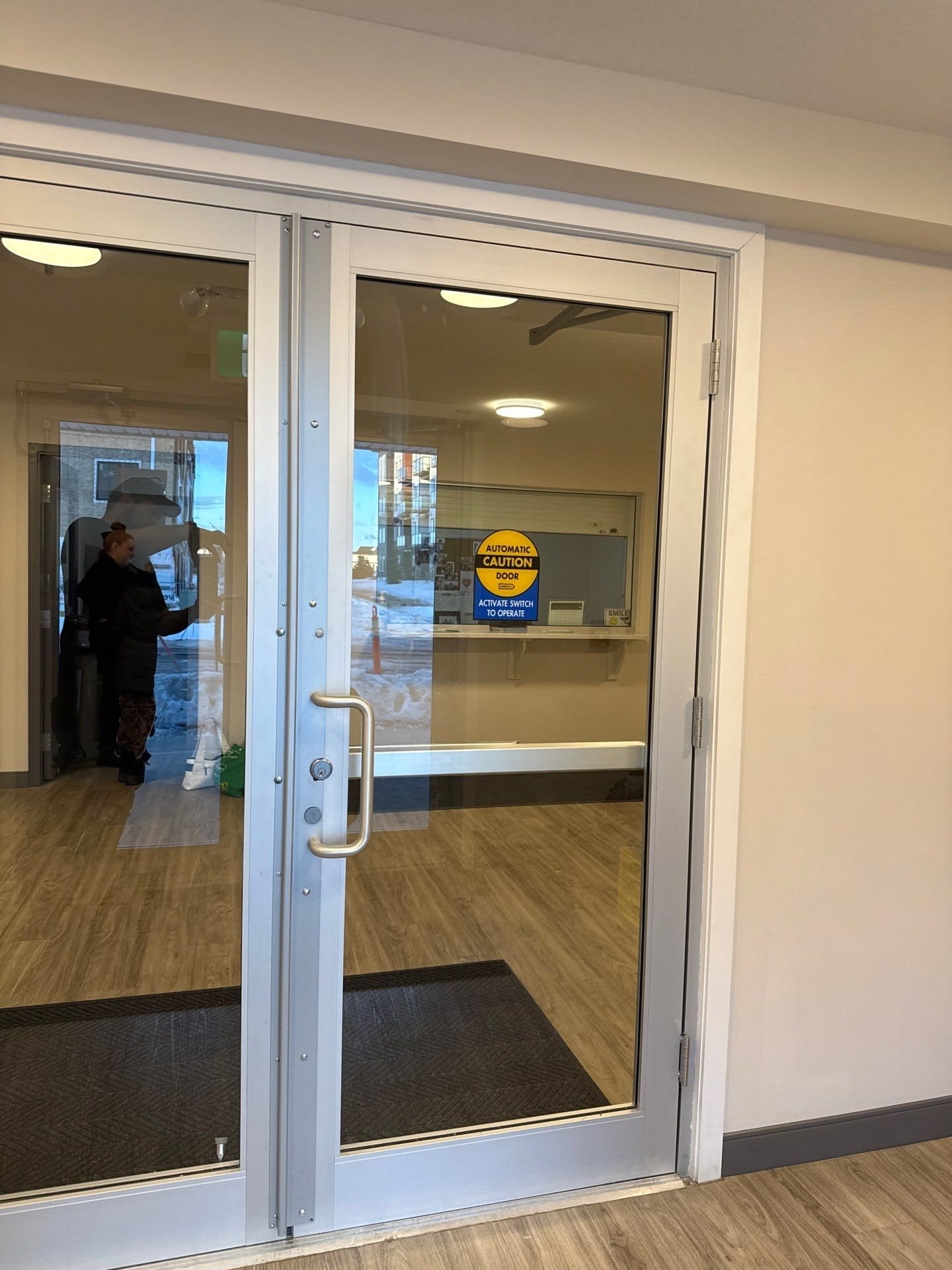
Automatic Swing Door Maintenance
Swing doors generally require less maintenance but still need periodic checks.
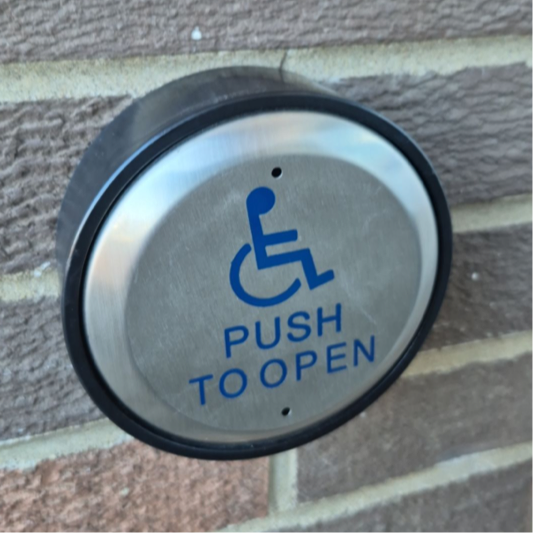
Check Activation Switches (Wireless)
If your door uses wireless push plates:
Press and hold the activation button.
You should hear a series of beeps:
- 1 beep = low battery
- 5 beeps = full battery
Low batteries can cause inconsistent activation or delayed response.
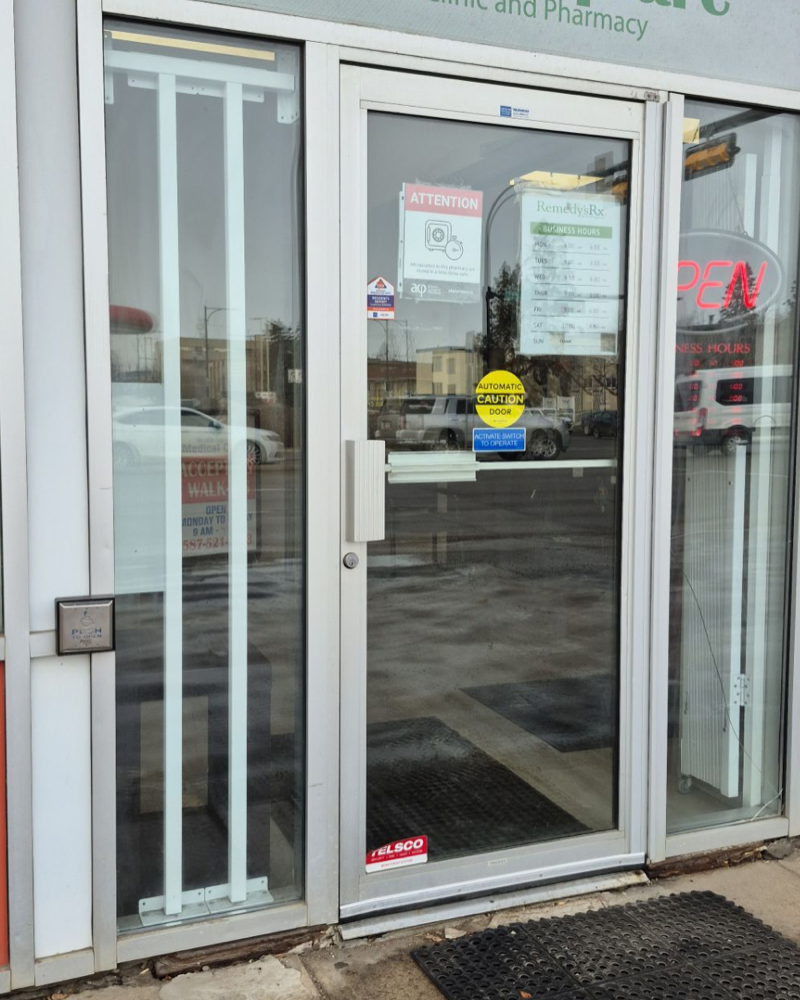
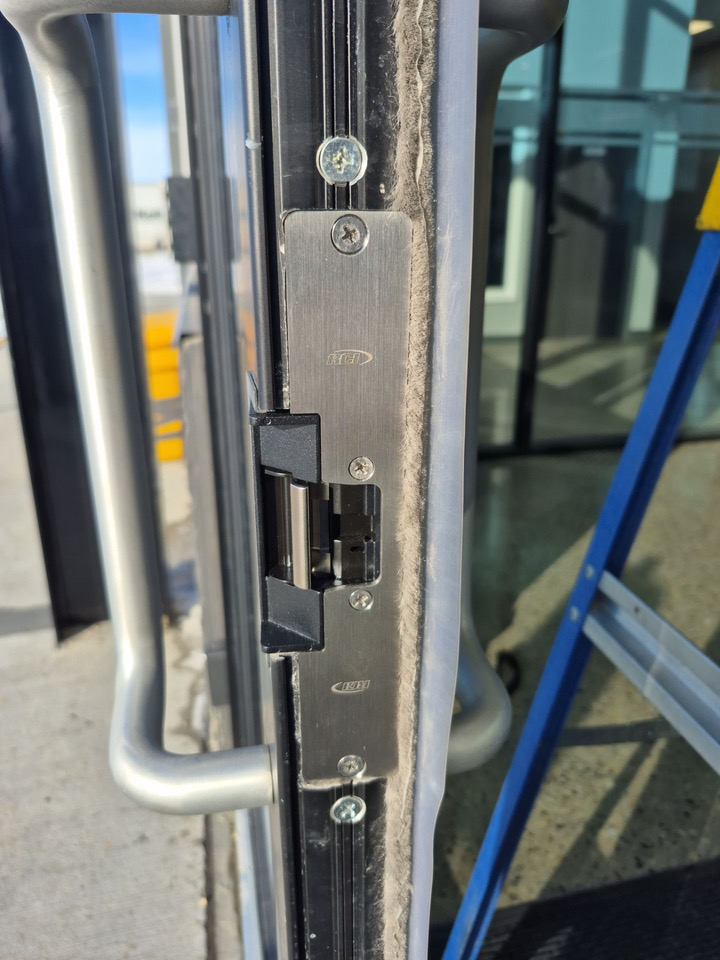
Check Door Closing and Latching
Ensure the door:
- Closes fully
- Latches properly
- Aligns correctly with the strike
- Listen for any grinding noises
- Check for any signs of leaking or dripping oil
If the latch is not engaging or the motor is not operating the door properly, it can affect both security and performance.
Lubrication for Door Hardware (Use With Caution)
For door hardware such as latches or mechanical components, lubrication may be used as a temporary measure only while waiting for service.
However:
- It should not be treated as a long-term fix
- It does not address the root cause of the issue
If lubrication is used:
- Never use WD-40
- We recommend a dry lubricant, such as silicone spray
Dry lubricants reduce friction without attracting dirt and debris.
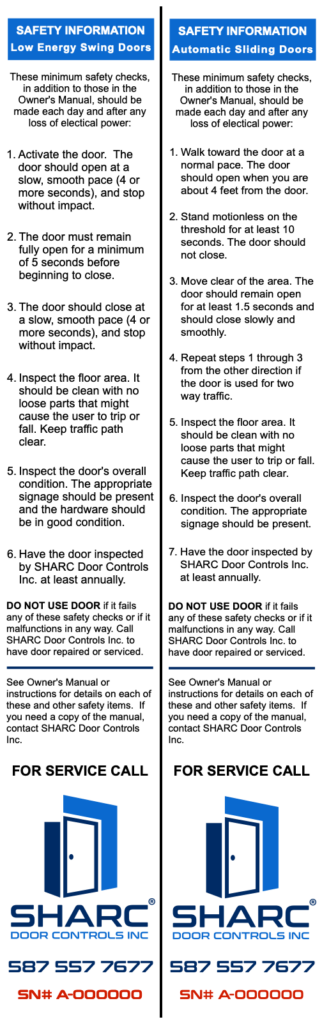
Daily Safety Checks (AAADM)
Automatic doors are required to be inspected annually by an AAADM Certified Inspector.
In addition, basic safety checks should be performed regularly.
Use the AAADM Daily Safety Check Decal
The safety check decal is typically located on the door jamb.
These checks are designed to verify:
- Sensor function
- Door response
- Safe operation
What to Do If a Door Fails a Safety Check
If a door does not pass:
- Turn the automatic function off
- Call for service
Daily checks play an important role in preventing unsafe conditions.
When to Call for Service
Some issues should not be handled in-house.
Call for service if you notice:
- Persistent noise or rumbling after cleaning
- Rough or inconsistent operation
- Missing guides or track damage
- Doors not latching properly
- Activation delays or failures
- Any failed safety check
In most cases, early service prevents more expensive repairs later.
Why Annual Inspections Still Matter
Even with basic maintenance, automatic doors are not a DIY system.
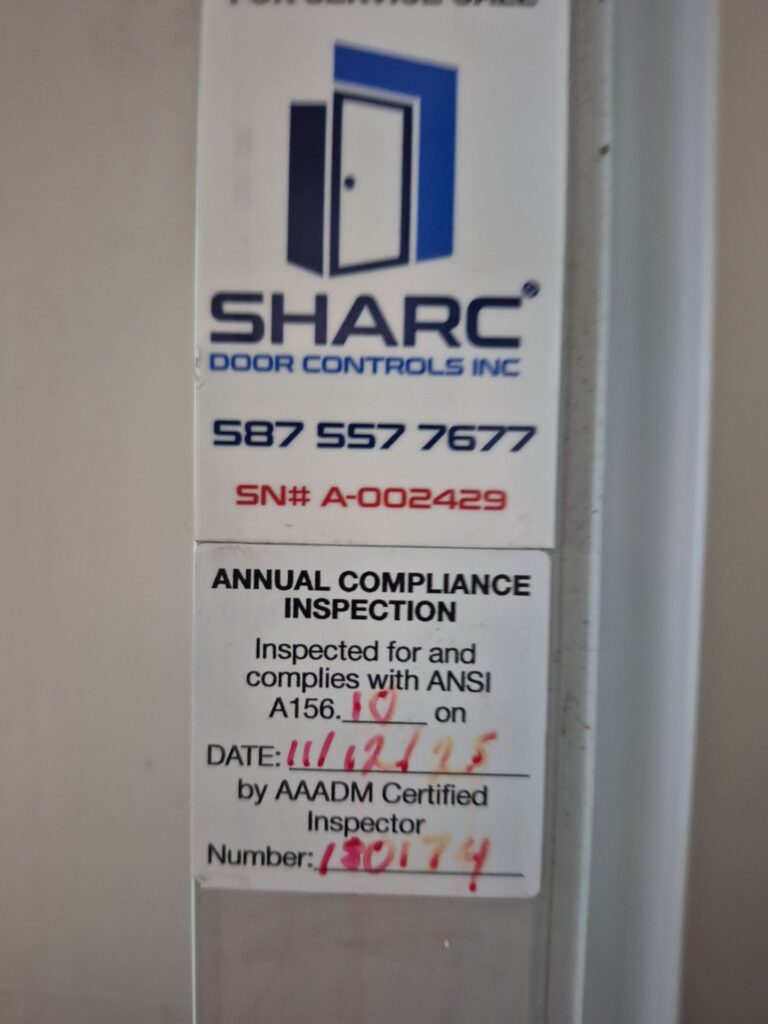
Automatic doors are required to be inspected annually by an AAADM Certified Inspector.
A professional inspection includes:
- Sensor testing
- Speed and force verification
- Safety and compliance checks
- Identification of wear or damage
- And more
Inspections go beyond what can be checked visually.
Practical Tips / Action Steps
- Clean sliding door tracks regulairly
- Remove debris carefully to avoid damaging inserts
- Never lubricate sliding door tracks
- Test wireless activation switches for battery levels
- Ensure doors fully close and latch
- Avoid using WD-40 on any door hardware
- Perform daily safety checks using the AAADM decal
- Schedule your annual AAADM inspection
FAQ
Most often, it’s caused by debris in the track. If cleaning doesn’t fix it, service is recommended.
No. Sliding doors should never be lubricated.
If needed, use a dry lubricant such as silicone spray—never WD-40—and only as a temporary fix.
Hold the button—1 beep indicates low battery, 5 beeps indicates full.
Turn off the automatic function and call for service immediately.
Spring maintenance is a simple way to improve the performance of your automatic doors after winter.
Sliding doors benefit most from cleaning and inspection, while swing doors require basic checks to ensure proper operation.
However, automatic doors are require properly functioning systems. Knowing what to handle in-house—and when to call for service—helps keep your building safe and reliable.
If your automatic doors need attention—or haven’t had their annual inspection—now is the time.
Contact us to schedule your AAADM safety inspection or to have your doors checked by a qualified technician in Edmonton and the surrounding areas.